
Industry’s First Platform To Detect, Protect, and Undo AI Risks To Data

The promise of AI Agents is staggering— intelligent systems that make decisions, use tools, automate complex workflows act as force multipliers for every knowledge worker. But for every advanced AI Agent that makes headlines for executing complex math proofs or automating scientific research in a lab setting, there are 100s of organizations that are struggling to scale Agents.
Why?
Enterprises are keen on the AI risks that have made headlines- risks like sensitive data leakage, prompt injection attacks, compliance violations or cascading failures caused by errant agents. The “move fast and break things” philosophy doesn’t work when Agents can autonomously delete, fabricate, or overwrite entire production data sets at machine speed.
The barrier to scaling isn’t the capabilities of AI or the infrastructure needed to deploy it- it’s the ability to manage risk to data.
“Organizations that are serious about capturing AI value should treat governance as a strategic capability, not an afterthought. Those that build strong governance frameworks now will be positioned to scale AI quickly and safely. On the other hand, those that treat governance as a checkbox exercise may find themselves unable to move AI from pilot to production, held back by the very risks they failed to address.”
Source: Deloitte state of AI in the Enterprise, Jan 2026
To move beyond stop-and-start pilots, organizations need more than a checklist of vulnerabilities and collection of siloed data security, identity governance and resilience tools. They need more than chaotic ad-hoc incident response and recovery. They need a unified solution to systematically identify risks so they can secure and govern the entire system around agents including the data they use in order to mitigate and respond to threats across the enterprise.
Introducing Agent Commander
The first integrated offering from Veeam’s successful acquisition of Securiti AI, Agent Commander brings together the market-leading solutions from both companies. Veeam’s trusted data resilience combined with Securiti AI’s Data Command Center, delivers a unified platform that gives organizations total visibility, control, and protection over their entire data and AI estate including production and backup environments.
This powerful solution detects hidden risks and Shadow AI, provides comprehensive controls to protect data as it moves through AI systems, and uniquely allows teams to instantly undo AI agent mistakes with precise rollbacks. Agent Commander provides the visibility and control needed to confidently scale AI, turning security into a true business accelerator for safe and rapid AI adoption.
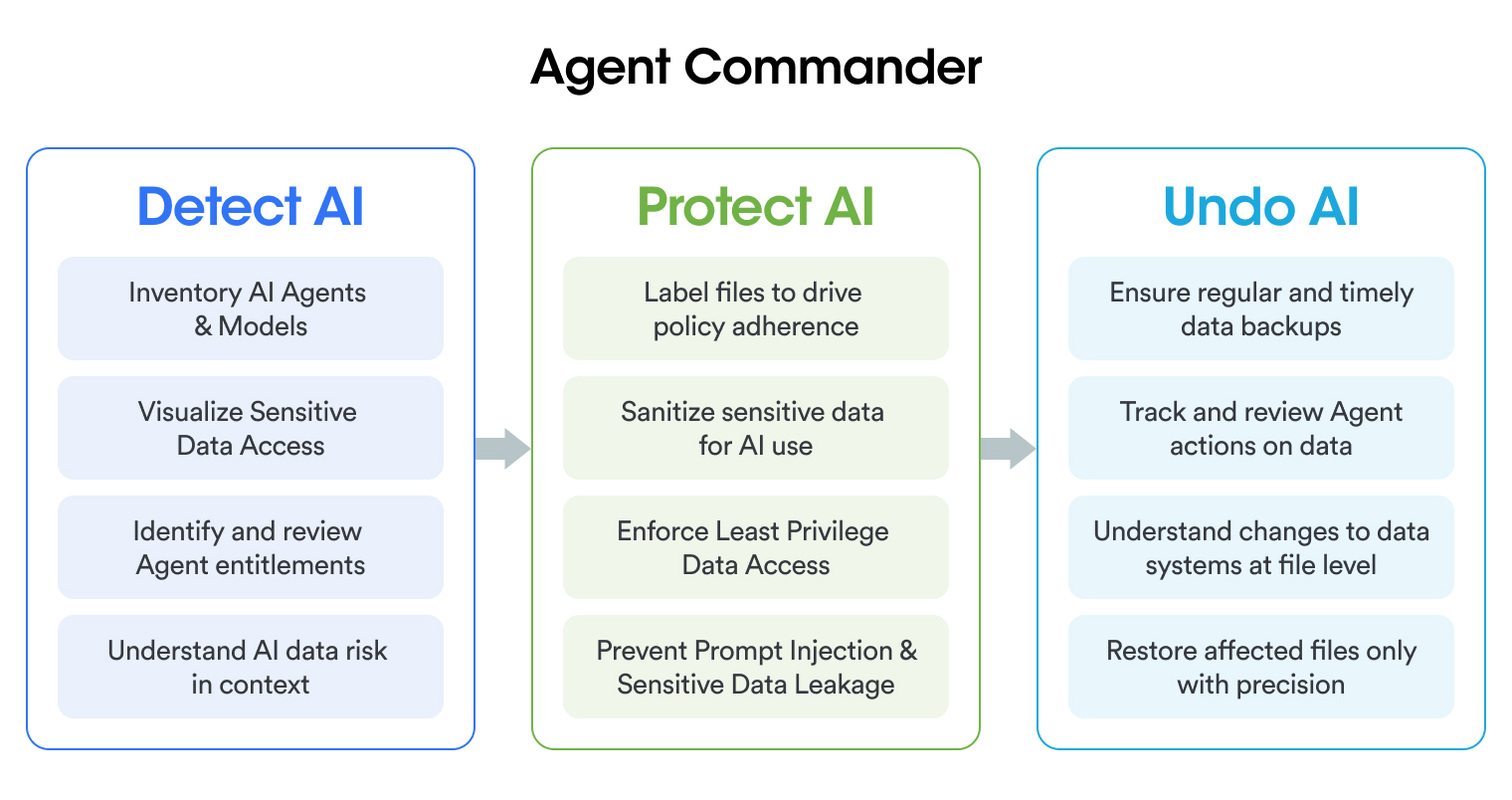
Detect AI Risks
AI agents are proliferating rapidly, embedded in SaaS platforms, deployed in public cloud environments, and built internally using low-code tools. This velocity has created widespread shadow AI, where agents operate outside centralized governance. According to the IBM Cost of a Data Breach Report (Nov 2025), 20% of organizations have already experienced breaches tied to shadow AI.
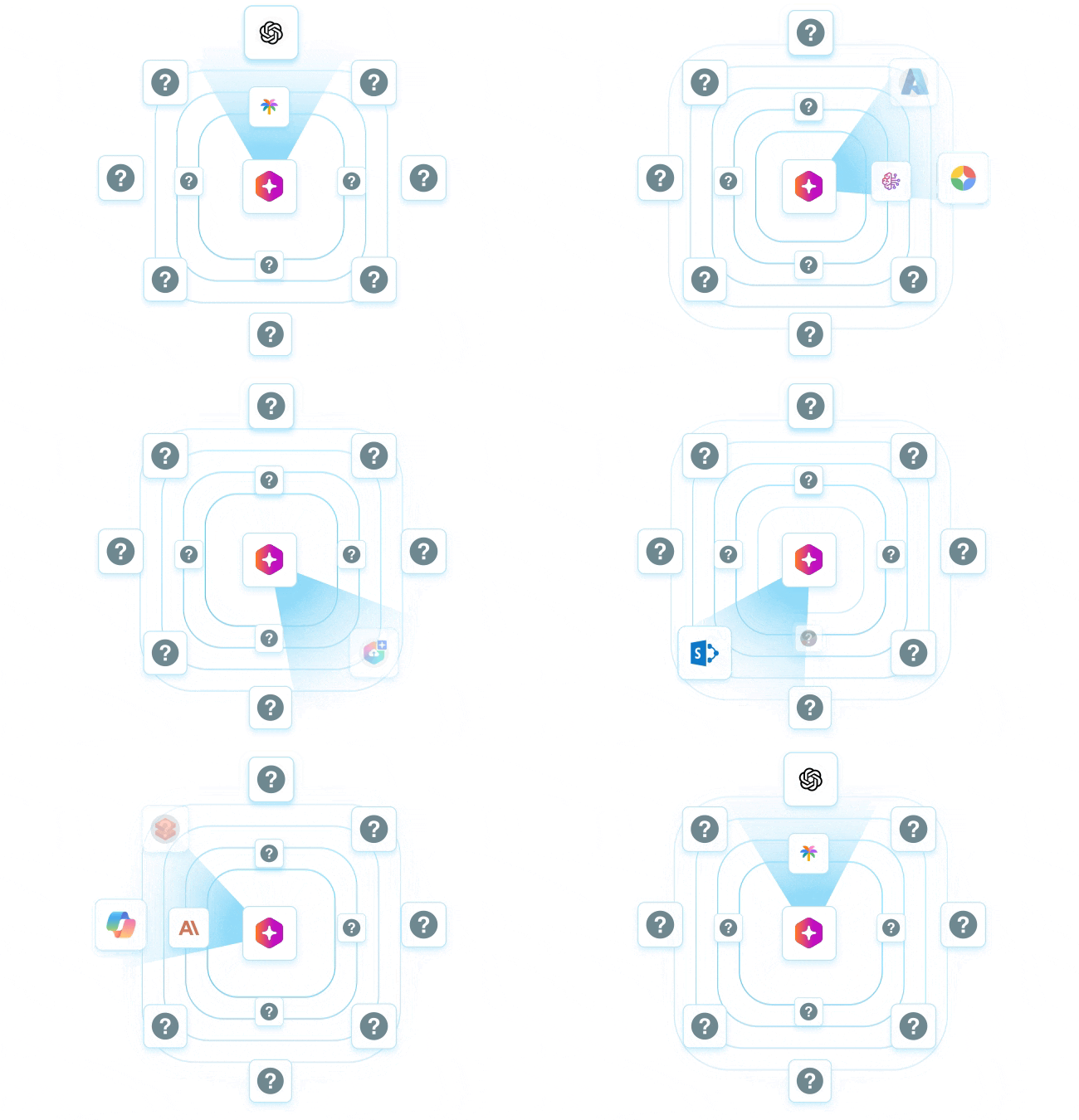
Simply discovering agents however does not give a complete view into risk. Risk emerges from a lack of contextual visibility into what agents can access, what sensitive information they touch, and take action on data across millions millions of files in an enterprise data ecosystem. Sensitive data alone is not inherently risky. A powerful agent alone is not inherently risky. But when broad permissions, unclassified dark data, and external exposure intersect, organizations face risks of data leakage, compliance violations, and operational disruption amplified by the machine speed at which agents operate.
How Agent Commander Works
Agent Commander transforms fragmented visibility into comprehensive AI risk intelligence.
It automatically discovers agents, models, and connected data assets across environments. It catalogs their entitlements, maps how they access, train on, retrieve, process, and disseminate data, and provides deep insight into the sensitivity and regulatory context of that data.
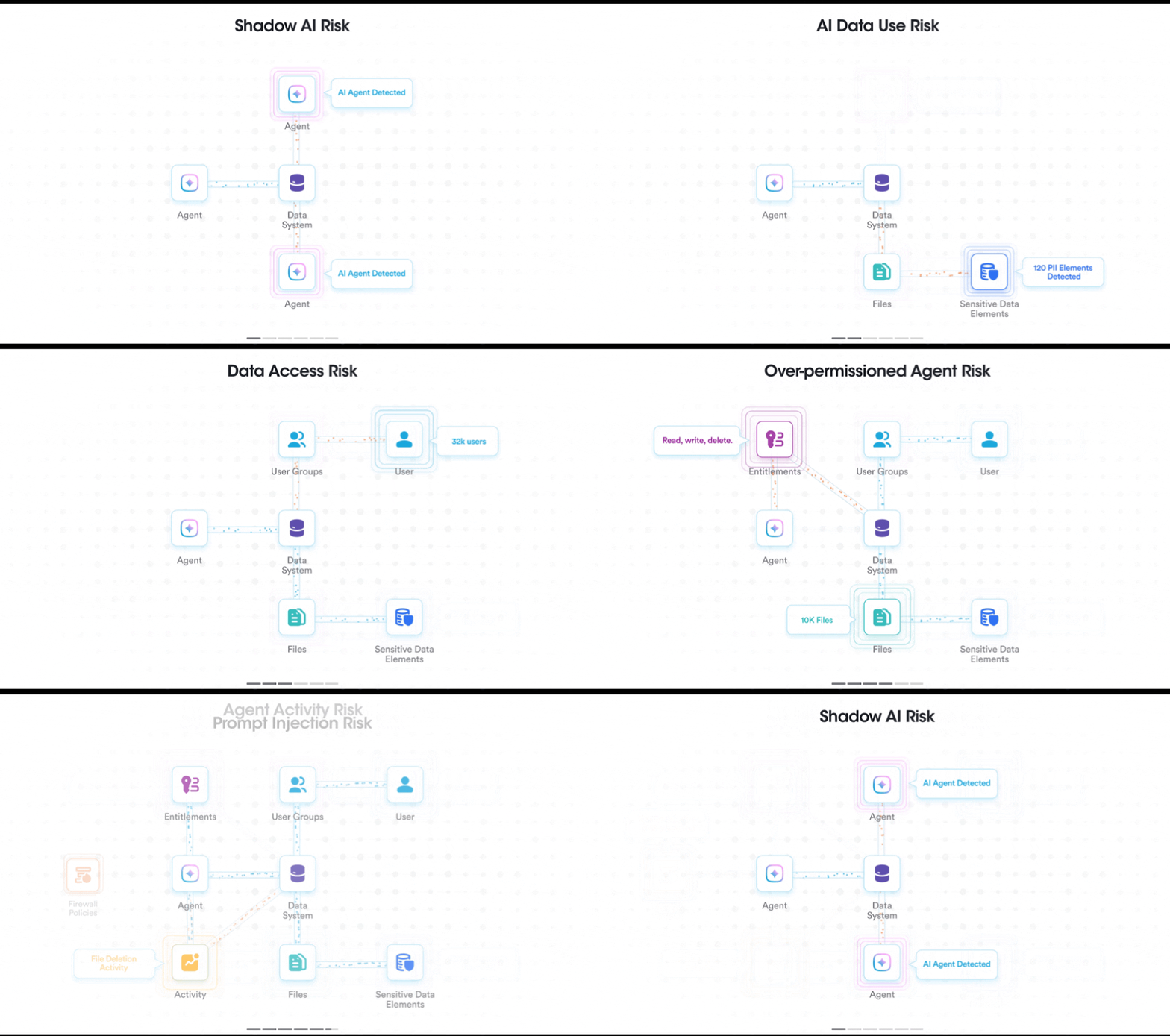
Powered by the DataCommand GraphTM, Agent Commander correlates identity, data, permissions, agent activity, and policy context to infer and visualize risk at the intersection of these factors. This enables organizations to:
- Gain a complete inventory of agents and their privileges
- Understand how agents interact with sensitive and regulated data
- Identify toxic combinations of overpermissioned agents and high-risk data
- Detect agent actions at a file level, including reads, writes and deletes
- Proactively surface risks before they become incidents
Instead of reacting to shadow AI after a breach, organizations can detect AI system level risk holistically, establishing the foundation for safe AI.
Protect AI Systems
AI agents amplify risk in two fundamental ways.
First, they magnify existing data security gaps. Agents access and process data at machine speed and scale—surfacing misconfigurations, excessive privileges, and sensitive data exposure that may never have been triggered by human users.
Second, they create an entirely new attack surface. Every prompt, retrieval, write, and tool invocation becomes a discrete AI event. As agents scale across users, systems, tools, and interconnected workflows, the volume and complexity of these events grows exponentially. Many of the threats mapped in frameworks like OWASP Top 10 for Agentic Applications and MITRE ATLAS are contextual—risk depends on intent, sensitivity, permissions, and downstream impact. Traditional controls are not designed for this level of granularity or context.
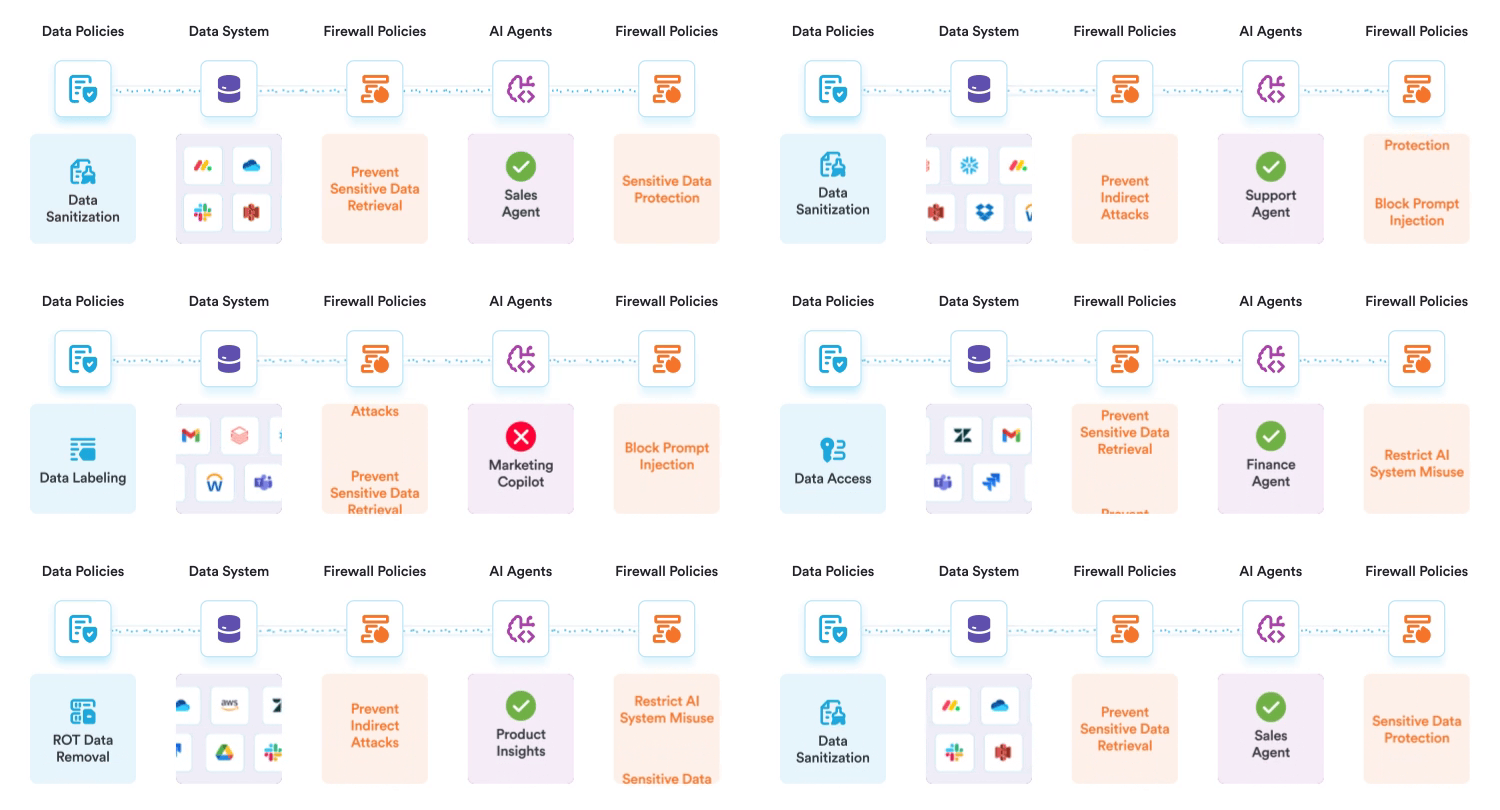
Agent Commander delivers a unified control layer across data and AI, combining deep data-layer governance with runtime AI-layer guardrails.
Protecting the Data Layer
At the foundation, Agent Commander strengthens the data layer to prevent agents from amplifying underlying weaknesses:
- Context-aware data labeling such as “business confidential”, “not for training” or “do not index” ensures data is used only within approved boundaries.
- Sensitive data sanitization removes, redacts, or masks PII and regulated information before AI systems process it.
- Least-privilege controls identify and remediate overpermissioned data access at the source system, reducing what agents and humans can access in the first place.
- Data minimization eliminates redundant, obsolete, and trivial (ROT) data, ensuring only high-quality, policy-aligned data is available for model training and AI use.
By hardening the data estate with dynamic policies and controls, organizations can ensure that their data is safe for usage by AI Agents across the organization.
Protecting the AI Layer
At runtime, Agent Commander applies intelligent, context-aware controls across AI interactions:
- Prompt and retrieval inspection to detect prompt injection, malicious intent, or indirect attacks.
- Context-aware policy enforcement based on data sensitivity, user identity, and intended agent scope.
- Flagging and logging of policy violations for rapid SOC response instead of passing along to the agent.
- Output inspection to prevent sensitive data leakage or harmful responses to end users.
These controls operate at AI speed and scale, enabling organizations to enforce proactive data controls while defending against emerging and evolving threats across AI systems.
Undo AI Mistakes
The third dimension of Agent risk is operational: agents can take actions on data and they can make mistakes.
Agents can delete directories, overwrite production datasets, or generate flawed writes due to misconfiguration, excessive privileges, flawed logic, or missing guardrails. At AI speed, a single faulty action can propagate across thousands or even millions of files in seconds.
But the critical challenge is not just that agents can make mistakes. It is knowing exactly what changed.
If an AI agent modifies data across a large-scale environment, how do you identify the specific files impacted out of millions? Without granular visibility into agent-level activity mapped to individual data assets, organizations are left with two undesirable options:
- Spend days manually investigating what changed, or
- Perform broad system-wide restores from backup, an operationally disruptive and costly response that rolls back far more than necessary.
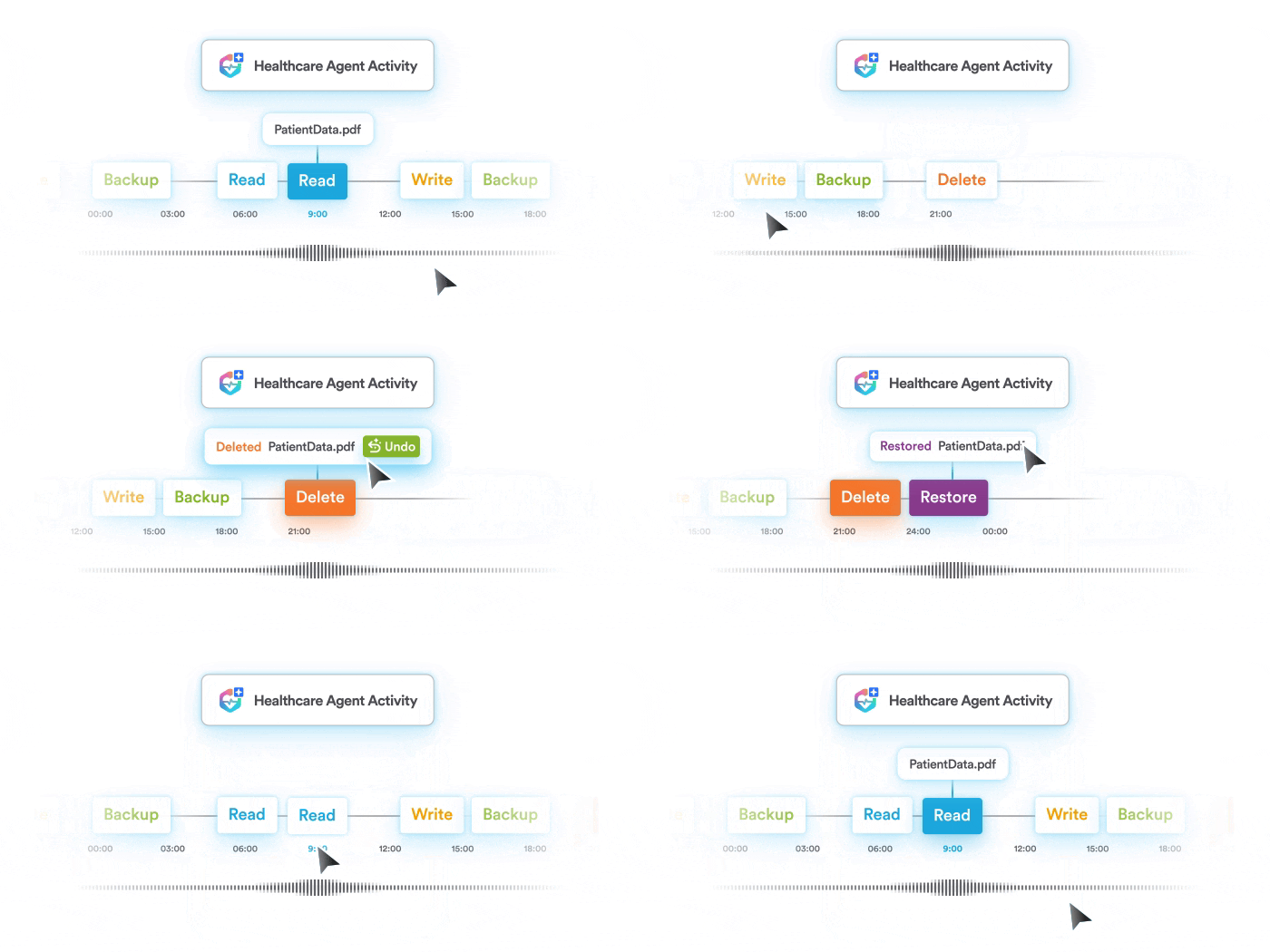
In the AI era, recovery must be precise and fast.
Agent Commander Enables Precision Resilience
Agent Commander delivers precision resilience by combining contextual intelligence with enterprise-grade data recovery.
Securiti’s Data Command Graph tracks agent-level activity at a granular level, capturing which files were read, modified, or deleted, and correlating those actions to specific agents, identities, and policies. This provides security teams with exact visibility into what changed and why.
Paired with Veeam’s industry-leading data resilience platform, Agent Commander enables:
- Granular identification of impacted files across production systems
- Context-driven isolation of AI-induced changes
- Automated, file-level restoration from trusted backups
- Recovery without full system rollback or extended downtime
Instead of restoring entire databases or storage systems, organizations can surgically undo the precise files altered by an agent, preserving operational continuity while eliminating the unintended impact.
This is precision resilience for the agentic era.
By combining deep contextual intelligence with reliable backup and recovery, Agent Commander enables organizations to confidently deploy autonomous agents, knowing that if something goes wrong, it can be undone quickly, accurately, and without collateral damage.
Agent Commander Drives High-Impact Use Cases
- Eliminating Shadow AI: Agent Commander brings all unsanctioned and “dark” AI initiatives under centralized governance by not only discovering and cataloging agents and models across the enterprise, but also mapping the underlying data they can access, the sensitive information they interact with, and the associated risk posture. By correlating agent activity, entitlements, data sensitivity, and policy context, organizations gain comprehensive visibility and enforce consistent governance controls across all AI systems, whether sanctioned or shadow, dramatically reducing AI-driven data risk.
- Securing SaaS AI Agents: Organizations struggle to scale SaaS agents like Microsoft Copilot, Amazon Q, and Gemini Enterprise because underlying data controls are not AI-ready. Missing or inconsistent data labeling, excessive privileges, unmanaged ROT data, and unintended exposure of sensitive information create unacceptable risk. Agent Commander identifies and remediates these foundational data issues so organizations can scale SaaS AI agents safely.
- Securing Custom Agents in the Public Cloud: Like SaaS agents, custom agents require AI-ready data controls. But unlike SaaS agents, organizations must also protect custom agents against external and runtime threats because the burden of these controls sits with the teams building and operating the agents, not a SaaS provider. Agent Commander pairs hardened data controls with context-aware runtime guardrails to defend custom agents during operation, and adds precision “Undo” to recover quickly when agents accidentally write, overwrite, or delete data, enabling safe AI without disruptive system-wide restores.
- Driving Broad AI Compliance: Launching AI agents requires more than compliance with traditional data protection laws. It demands alignment with emerging AI mandates such as the EU AI Act and similar frameworks globally. Manual approaches cannot keep pace with overlapping regulatory requirements. Agent Commander automates control validation, continuously maps technical safeguards to regulatory obligations, and delivers real-time compliance auditability to GRC teams, enabling organizations to deploy AI agents confidently and at scale.
Why Point Solutions Fall Short in the Agentic Era
As AI adoption accelerates, many organizations attempt to secure agents using siloed cloud security (AI-SPM), data security, data resilience, and AI guardrail tools. But these point solutions were not designed for the systemic, interconnected risks of agentic environments.
AI security is not an isolated problem at a specific point in the stack. Risk emerges from the interaction between data, identity, agents, humans, and the actions they take. Tools that secure only one layer inevitably create blind spots.
1. Cloud Security (AI-SPM) Tools: Outside-In Visibility
Cloud security and AI-SPM tools treat AI as another cloud workload, focusing on infrastructure posture, model exposure, and misconfigurations. They lack deep contextual intelligence into data sensitivity, agent entitlements, and runtime data interactions, making it difficult to detect compound risks that emerge across data, identity, and AI behavior.
2. Data Security Tools: No Runtime Control or Resilience
Traditional data security platforms may perform discovery and classification, but are not built to monitor AI prompts and interactions. More critically, they cannot recover from AI-driven actions – writes, deletions, or corruption. Detecting sensitive data does not equate to undoing agent mistakes.
3. AI Guardrail & Prompt-Layer Tools: Runtime Without Data Control
Guardrail tools inspect prompts and responses for injection or policy violations. However, they do not have proactive data controls or prevent agents from operating on high-risk data. And when destructive actions occur, they offer no recovery path.
4. Traditional Data Resilience Vendors: Recovery Without Context
Backup platforms can restore data systems after failure, but they lack visibility into which specific files an AI agent altered. Without granular activity context, recovery often requires broad system restores, which are slow and disruptive. They also do not provide proactive data or AI controls to reduce risk before incidents occur.
Agent Commander: The Most Comprehensive Platform for Safe AI at Scale
Agent Commander represents the first major integration following Veeam’s acquisition of Securiti AI, bringing together market-leading Data Resilience, Data Security, and AI Security into a single converged platform purpose-built for the agentic era.
Built into the Securiti Data Command Center and integrated with Veeam, Agent Commander delivers complete visibility, control, and protection across the entire data and AI estate.
What Makes Agent Commander Unique?
At its core is the Data Command Graph , a relational intelligence engine that maps connections between data, identities, AI models, and agents across both production and backup environments.
It reveals what other tools cannot see: the toxic combinations where compromised identities, sensitive data exposure, excessive privileges, and agents intersect, and how those risks compound and cascade at AI speed.
No standalone AI security tool delivers this level of contextual data intelligence. No traditional backup platform provides this level of AI-aware precision combined with proactive control.
Agent Commander uniquely unifies three capabilities the industry has never brought together:
- Detect AI Risk with Context
- Protect AI Systems Holistically
- Undo AI Mistakes with Precision
By converging relational data-and-AI intelligence and controls with enterprise-grade resilience infrastructure, Agent Commander establishes the foundation for safe, trusted, and recoverable AI at scale.
To dive deeper:
The post Introducing Agent Commander appeared first on Veeam Software Official Blog.
from Veeam Software Official Blog https://ift.tt/gO5pcFm
Share this content: